
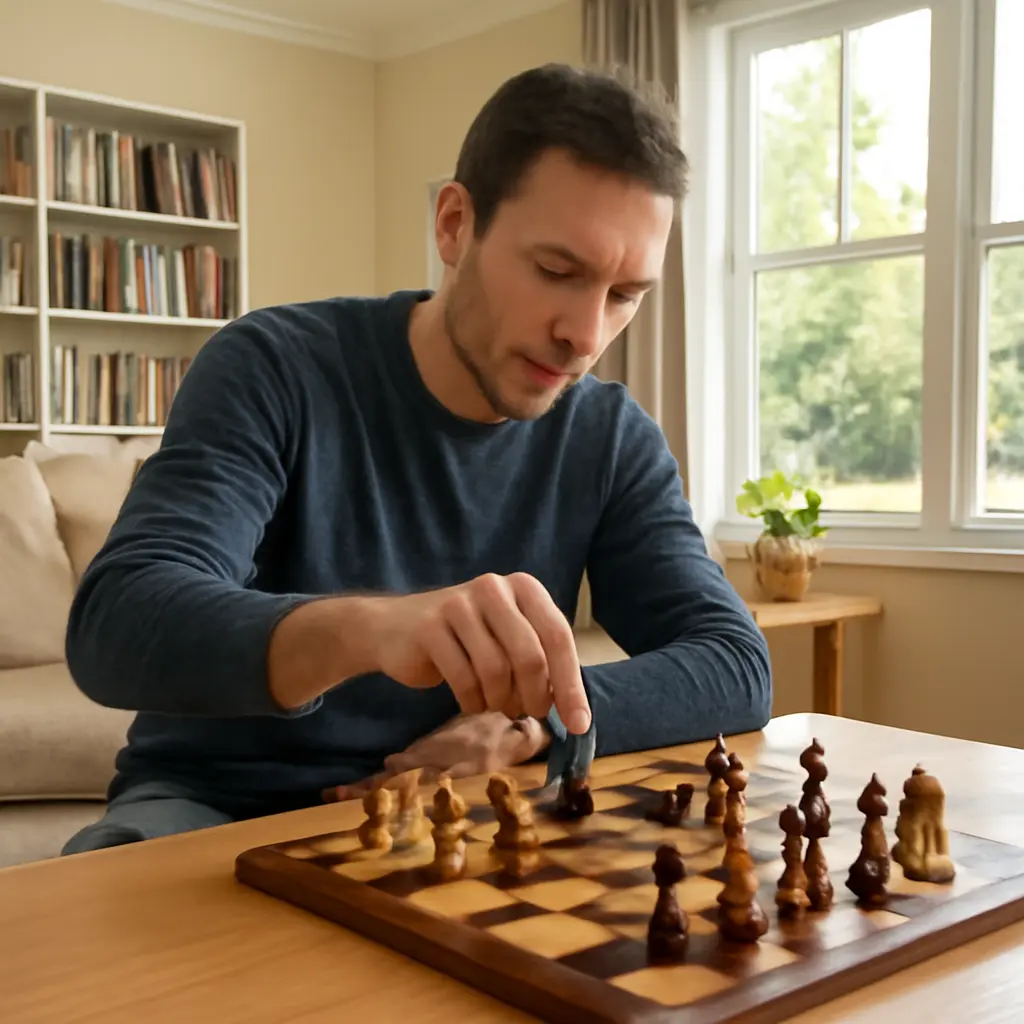
Chess is a two-player strategy game in which each person moves pieces across a board to checkmate the opponent’s king. For a parent introducing a child to chess, the most useful framework is simple: make learning playful, teach a few rules at a time, practice together, and let the child’s interest set the pace. That approach matters because chess can offer structured practice in planning and decision-making, but it should be an enjoyable activity—not a test of a child’s intelligence or a promise of academic gains. The framework below covers age-appropriate starts, essential rules, manageable practice, and ways to choose a club, class, or online option.
Build a beginner-friendly chess framework for families
A family chess framework is a repeatable way to introduce the game while balancing instruction, play, and a child’s readiness. It is not a fixed curriculum: children differ in their interest, attention, reading ability, and comfort with competition. The U.S. Chess Federation (US Chess) provides beginner resources and organizes rated events, while national scholastic programs show that chess can be introduced in both school and community settings. Neither participation nor early success requires a child to start at a particular age.
Start with interest, not a target age
A child is ready to explore chess when they are curious enough to sit with the board, try moving pieces, or play a short game with an adult. Some children enjoy chess before they can read; others prefer to start later. Begin with a brief invitation—“Would you like to learn how the knight moves?”—rather than a demand to complete a lesson or win a game.
Chess is played on an eight-by-eight board with 64 squares and six kinds of pieces. That clear structure can make the game approachable, but its full rules take time to learn. Treat early lessons as exploration: praise curiosity, patience, and thoughtful choices rather than labeling a child “gifted” or “not a chess player.”
Set a low-pressure routine
A beginner routine works best when it is short enough to feel manageable and flexible enough to stop when attention fades. Try a few minutes of one-piece practice, a mini-game, or a complete game with reminders. There is no research-backed practice duration that fits every child, so use the child’s mood and interest as your guide.
- Keep the board available for casual play rather than making every session a lesson.
- Choose one goal at a time, such as learning the bishop’s movement or noticing when a king is in check.
- End on a friendly note, even if that means pausing before a game is finished.
Once chess feels like a shared activity, parents can teach the rules in an order that reduces confusion and gives children chances to use each new idea.
Teach chess rules through small, connected steps
Chess rules describe how pieces move, how turns work, and how a game ends. The basic movement rules are standardized in the International Chess Federation’s (FIDE) Laws of Chess, while beginner instruction often breaks them into smaller lessons. Teach the board and piece movements first, then introduce check, checkmate, and special moves as they become relevant.
Learn the board and piece movements
Set up the board so each player has a light square at the right-hand corner. Point out the ranks and files if useful, then introduce how each piece travels: rooks move along ranks and files, bishops diagonally, queens in either direction, and kings one square at a time. Knights move in an L shape and can jump over pieces; pawns move forward but capture diagonally.
For a first lesson, use only a few pieces or play a mini-game. For example, two players can practice moving knights to reach a target square. Mini-games help children focus on one movement rule instead of trying to remember every piece at once.
Explain check, checkmate, and draws
Check means a king is under attack and must be made safe. Checkmate occurs when the king is in check and no legal move can remove the threat; that ends the game. A draw is a game that finishes without either player winning, including situations such as stalemate, where the player to move has no legal move but is not in check.
Keep the first explanation practical: when a king is attacked, pause and ask, “Can it move away, can the attacking piece be captured, or can something block the attack?” This turns a rule into a useful routine without requiring a beginner to memorize every technical detail at once.
Add special moves only when the basics are comfortable
Castling, en passant, and pawn promotion are standard parts of chess, but they can wait until a child understands ordinary movement and check. FIDE’s Laws of Chess define the conditions for these moves, including restrictions on castling when the king or relevant rook has moved, or when the king would cross or land on an attacked square.
A parent can introduce each special rule with a board example, then return to normal play. If a child forgets a rule, calmly reset the position or explain the move. Correcting a beginner is useful; turning every mistake into a penalty can make learning feel intimidating.
Use practice and feedback to make chess enjoyable
Chess practice is the combination of playing, noticing what happened, and trying again. It can develop familiarity with patterns and encourage a player to consider consequences, but claims that chess automatically raises grades or general intelligence go beyond what a parent should assume. A 2016 meta-analysis by Sala and Gobet, published in Educational Research Review, found that the evidence for transfer from chess instruction to broad academic skills was limited and that study quality affected conclusions. Treat learning and enjoyment as worthwhile outcomes in themselves.
Use one question after a game
A short reflection helps a child learn without turning play into an exam. Ask one neutral question: “Which move are you proud of?” or “Was there a moment you would like to try differently next time?” The child may answer, point to a move, or simply choose to play again.
Parents can model the same habit by sharing their own thinking: “I moved my queen without checking whether it was protected.” This shows that mistakes are part of practice and that adults are learning, too.
Choose a pace that matches attention and motivation
A full game can be long for a young beginner, especially when each move introduces a new question. Try a smaller board exercise, a simple puzzle, or a game with fewer pieces. If a child loses interest, stop and revisit chess another day rather than insisting on finishing a set number of games.
The goal is a sustainable habit, not maximum practice time. Praise effort that is under the child’s control—looking for a safe move, waiting for a turn, or recovering after a mistake—rather than focusing only on winning.
Keep competition in perspective
Rated chess and tournaments can be motivating for children who enjoy competition, but they are optional. US Chess explains ratings as a way of estimating playing strength and pairing competitors; a rating is not a measure of a child’s worth, potential, or overall ability. Before entering an event, check the time controls, age group, supervision, and expected level of formality.
For a first event, focus on the experience: meeting other players, learning how tournament rounds work, and practicing good sportsmanship. Discuss beforehand how to respond to both wins and losses, and make it clear that the child can take a break or decide not to continue.
Choose a chess learning setting that fits your family
Chess learning settings include parent-child play, school clubs, community programs, private lessons, and online platforms. The best option depends on access, cost, schedule, teaching style, and the child’s preference. A program’s claims should be considered separately from its practical value: a welcoming club can offer regular opponents and routine even when no particular academic outcome is guaranteed.
At-home learning
At-home chess is a flexible starting point. A parent can use a physical board, beginner book, or supervised digital tool and adjust each session to the child. This option is especially useful for casual exploration, but parents do not need to be strong players: learning a rule together can be part of the activity.
School and community clubs
A club gives children access to other players, group instruction, and a shared schedule. Ask whether beginners are welcome, how children are supervised, whether equipment is provided, and how the program handles different skill levels. For school-based options, the National Scholastic Chess Foundation describes scholastic chess programs as opportunities to bring chess instruction and play into educational settings; families should still assess the specific program rather than assume every club has the same structure.
Online play and lessons
Online platforms can make opponents and puzzles easier to find, but they require age-appropriate privacy and supervision choices. Review account settings, chat features, advertising, screen-time expectations, and platform age rules before a child uses a service. For younger children, playing together on a shared device can make it easier to discuss moves and keep the experience social.
Whether learning at home, in a club, or online, use the same family standard: the setting should be safe, respectful, and enjoyable. That standard leads naturally to a practical sequence parents can follow from the first board to a child’s next step.
Follow a simple first-month plan
A first-month plan is a flexible sequence, not a deadline for mastering chess. The following stages can be stretched, repeated, or skipped depending on a child’s interest. The accompanying text-based progress chart summarizes the sequence: board and pieces → movement mini-games → check and checkmate → relaxed full games → optional club or tournament.
- Explore: Set up the board together and let the child handle the pieces. Name the pieces and notice how they differ.
- Practice movement: Introduce one or two pieces at a time through mini-games or simple challenges.
- Play short positions: Use a reduced set of pieces to practice capturing, protecting, and moving safely.
- Learn game endings: Explain check and checkmate with examples; add draws and special moves as they arise.
- Try full games: Play at a relaxed pace, allow questions, and reflect briefly afterward.
- Choose a next step: If the child asks for more, explore a club, beginner lesson, or friendly event.
If a child becomes frustrated, step back to an easier activity or take a break. If interest grows, offer more opportunities without turning chess into an obligation. A child who chooses to return is more likely to keep chess as a positive part of family life.
Conclusion: make the first move together
A useful family chess framework begins with a child’s interest, introduces rules in small steps, and uses practice that rewards curiosity and effort. Parents can start with the board and piece movements, build toward check and checkmate, and then choose among home play, clubs, lessons, or online options. Research does not justify treating chess as a guaranteed shortcut to academic improvement; its value can instead be found in shared play, learning a complex game, and practicing thoughtful decision-making.
Set out a board, teach one movement, and invite your child to make the next move. For further reading, consult the FIDE Laws of Chess for official rules and US Chess beginner resources for guidance on play and competition.
Sources: International Chess Federation (FIDE), FIDE Laws of Chess, https://handbook.fide.com/chapter/E012023; U.S. Chess Federation (US Chess), Learn to Play Chess, https://new.uschess.org/learn-to-play-chess; U.S. Chess Federation (US Chess), Ratings, https://new.uschess.org/ratings; Sala, Giovanni, and Fernand Gobet, “Do the benefits of chess instruction transfer to academic and cognitive skills? A meta-analysis,” Educational Research Review, 2016, https://doi.org/10.1016/j.edurev.2016.02.002; National Scholastic Chess Foundation, Scholastic Chess, https://www.nscfchess.org/.