
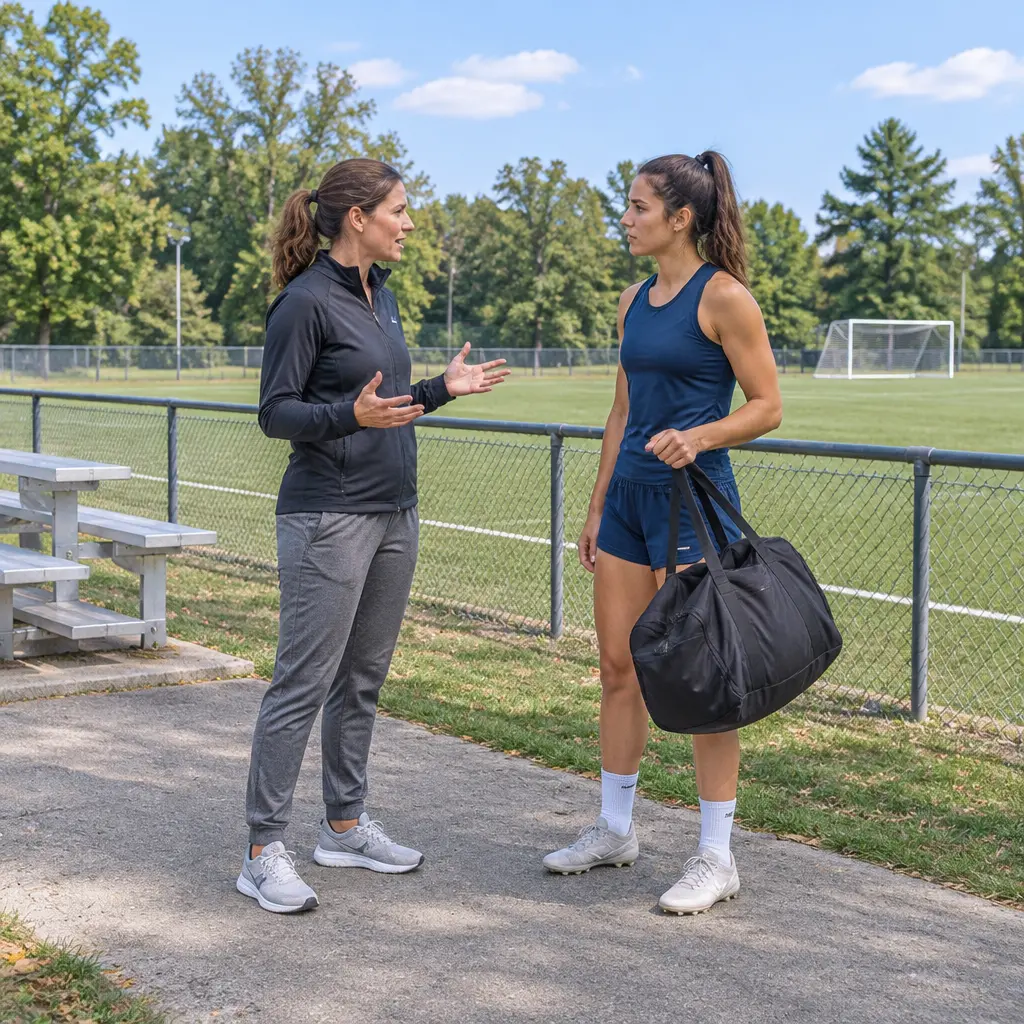
Emotional resilience in competition is the capacity to experience disappointment, pressure, or frustration and recover in ways that support learning, well-being, and respectful participation. In safe competitive environments, resilience is not about suppressing emotion or accepting mistreatment; it is built through supportive relationships, fair rules, achievable challenges, and opportunities to reflect after setbacks. Research in sport and youth development links autonomy-supportive coaching and psychological safety with healthier motivation and participation, while the American Psychological Association describes resilience as a process of adapting well in the face of adversity. This article explains how resilience works, how loss and frustration can become learning opportunities, what coaches and organizations can do to create safer settings, and how progress can be assessed without treating winning as the only measure of success.
Emotional resilience and competitive coping
Emotional resilience is a dynamic process, not a fixed personality trait. The American Psychological Association defines resilience as the process of adapting well in the face of adversity, trauma, tragedy, threats, or significant stress. In competition, relevant stressors may include losing, making a visible mistake, receiving criticism, facing a stronger opponent, or feeling pressure to perform. Resilience means noticing and managing the resulting emotion, then choosing a constructive next step—not pretending that the loss does not matter.
Related forms of competitive coping include emotional regulation, persistence, self-compassion, help-seeking, and flexible goal-setting. These capacities are connected but not interchangeable: persistence helps a participant continue, while emotional regulation helps them respond without escalating conflict. A safe environment supports both by protecting physical and psychological well-being and making clear that effort and improvement matter alongside results.
Emotional regulation under pressure
Emotional regulation is the ability to notice an emotional response and influence how it is expressed. A competitor might feel anger after a disputed call yet pause, breathe, ask a respectful question, and return attention to the next play. This does not require eliminating anger; it makes room for a deliberate response. The National Institute of Mental Health identifies skills such as recognizing emotions, managing stress, and maintaining supportive relationships as relevant to mental well-being.
Psychological safety and belonging
Psychological safety is a shared sense that people can ask questions, acknowledge mistakes, and seek help without humiliation or retaliation. In a competitive setting, it allows participants to admit that they are struggling and learn from errors. It does not mean removing standards or consequences; it means applying expectations consistently and addressing behavior without degrading the person. Coaches, teachers, referees, and teammates all help establish this climate through everyday language and responses to mistakes.
Loss and frustration as learning opportunities
Loss is an outcome; frustration is an emotional response to an obstacle, unmet expectation, or perceived unfairness. Neither automatically produces growth. A setback becomes useful when participants have time to settle, understand what happened, receive appropriate support, and identify a next step. The bridge from emotion to learning is reflection rather than blame.
Sport research offers a caution against assuming that competition is inherently beneficial or harmful. In a 2013 consensus statement in the British Journal of Sports Medicine, the International Olympic Committee emphasized that youth sport can support health and development when it is appropriately organized, but also recognized risks associated with excessive training, injury, and poorly managed environments. The practical implication is that challenge should be meaningful and proportionate, with recovery and safeguarding built in.
Responding to a loss without defining the person by it
A constructive post-loss review separates identity from performance. Instead of “I am a failure,” a participant can describe an observable event: “I rushed my final decision when the pace increased.” A coach can then ask what was within the participant’s control, what they learned, and what they want to practise. This approach preserves accountability while reducing shame. It also recognizes that outcomes depend on many factors, including opponents, conditions, health, and chance.
Managing frustration and conflict
Frustration management combines emotional awareness with boundaries and problem-solving. A short pause, slow breathing, hydration, or a brief break may help a participant regain composure. If frustration involves unsafe conduct, harassment, discrimination, or repeated humiliation, the response should not be limited to coping strategies: responsible adults and program leaders must address the behavior and protect those affected. Resilience should never be used to excuse preventable harm.
Reflection, feedback, and a next-step plan
Useful feedback is specific, timely, and focused on actions a participant can practise. A simple reflection can ask: What happened? What did I feel? What did I do well? What is one thing to try next time? This process turns a broad judgment into a manageable plan. Feedback should also identify strengths—such as persistence, teamwork, or composure—so improvement is not reduced to correcting errors.
Safe competitive environments that build resilience
A safe competitive environment combines physical safeguards with respectful relationships, fair procedures, and appropriate developmental expectations. The U.S. Centers for Disease Control and Prevention’s framework for positive youth development emphasizes supportive relationships, opportunities to build skills, and environments that promote safety and belonging. These principles apply beyond sport—to classrooms, games, arts, debate, and other settings where people perform in front of others and receive results or feedback.
Clear rules, fair play, and consistent boundaries
Clear rules reduce uncertainty about what counts as acceptable conduct and how disputes will be handled. Organizers should explain expectations for respectful communication, decisions, equipment, physical contact, and reporting concerns. Rules must be applied consistently, with a fair process for asking questions or appealing decisions. Fairness does not mean every competitor receives the same result; it means the process is transparent and participants are treated with dignity.
Supportive coaching and adult responses
Supportive coaching pairs high expectations with encouragement, choice, and constructive feedback. A coach can challenge a participant while offering a realistic path to improvement and recognizing effort, learning, and cooperation. In a 2016 meta-analysis published in the Journal of Sport and Exercise Psychology, researchers found that coach-created motivational climates are meaningfully associated with athletes’ psychological experiences and outcomes. The finding supports a practical lesson: how adults frame competition matters, not just the competition itself.
Safeguarding, inclusion, and appropriate challenge
Safeguarding means preventing and responding to abuse, bullying, discrimination, neglect, and avoidable physical risks. Inclusion requires attention to differences in age, disability, experience, identity, resources, and access to participation. Challenges should be demanding enough to encourage learning but not so overwhelming that participants are routinely exposed to humiliation, injury risk, or unmanageable stress. Adults should provide accessible ways to report concerns and explain who will respond.
Practical resilience-building strategies
Resilience develops through repeated practice in relationships and routines, rather than through a single motivational speech. Participants, coaches, families, and organizations can each help create conditions where disappointment is acknowledged and a constructive response is possible.
For participants: prepare, pause, and reflect
- Set process goals, such as communicating clearly or maintaining focus, alongside outcome goals such as winning.
- Use a brief reset routine after a mistake: pause, breathe, name the next task, and re-engage.
- After competition, identify one strength, one learning point, and one achievable practice goal.
- Ask for support when distress persists or begins to affect sleep, relationships, school, work, or enjoyment.
For coaches and families: model calm accountability
- Recognize effort, preparation, teamwork, and improvement—not only rankings and trophies.
- Discuss mistakes in private when possible, using specific observations rather than labels or sarcasm.
- Let participants express disappointment before rushing to advice or reassurance.
- Model respectful disagreement with officials, opponents, and other families.
- Take reports of bullying, unsafe conduct, or discrimination seriously and follow established safeguarding procedures.
For organizations: measure more than wins
Programs can assess resilience-building conditions through participant retention, perceived belonging, confidence in reporting concerns, injury and incident patterns, and participant feedback about coaching and fairness. These indicators do not replace performance measures; they show whether the environment is sustainable and supportive. A simple chart can compare season-to-season trends in retention, reported incidents, and anonymous safety ratings, while protecting participants’ privacy and interpreting small samples cautiously.
Conclusion: resilience grows through safe challenge
Emotional resilience in competition involves emotional regulation, psychological safety, constructive responses to loss, and reliable safeguarding. Loss and frustration can prompt learning when participants receive time, respectful feedback, fair rules, and a practical next step; they do not justify shame or unsafe conduct. Coaches, families, and organizations can strengthen resilience by valuing process as well as outcomes, addressing harm directly, and reviewing whether participants feel safe and included. Begin with one concrete action: after the next competition, ask what was learned, what support is needed, and what can be practised next. For further guidance, consult the American Psychological Association’s resilience resources, the CDC’s positive youth development materials, and the International Olympic Committee consensus statement on youth athletic development.
Sources: American Psychological Association, Building Your Resilience, https://www.apa.org/topics/resilience; National Institute of Mental Health, Caring for Your Mental Health, https://www.nimh.nih.gov/health/topics/caring-for-your-mental-health; Bergeron, M. F., et al., International Olympic Committee consensus statement on youth athletic development, British Journal of Sports Medicine, 2015, https://bjsm.bmj.com/content/49/13/843; Harwood, C. G., and Knight, C. J., Parenting in youth sport: A position paper on parenting expertise, Psychology of Sport and Exercise, 2015, https://doi.org/10.1016/j.psychsport.2014.03.001; National Academies of Sciences, Engineering, and Medicine, A Guide for Implementing the Science of Early Childhood Development, https://www.nap.edu/catalog/19401/a-guide-for-implementing-the-science-of-early-childhood-development; U.S. Centers for Disease Control and Prevention, Positive Youth Development, https://www.cdc.gov/youth-development/about/index.html